




What are the disadvantages of a Scroll Dry Vacuum Pump?
 Jul 03, 2026|
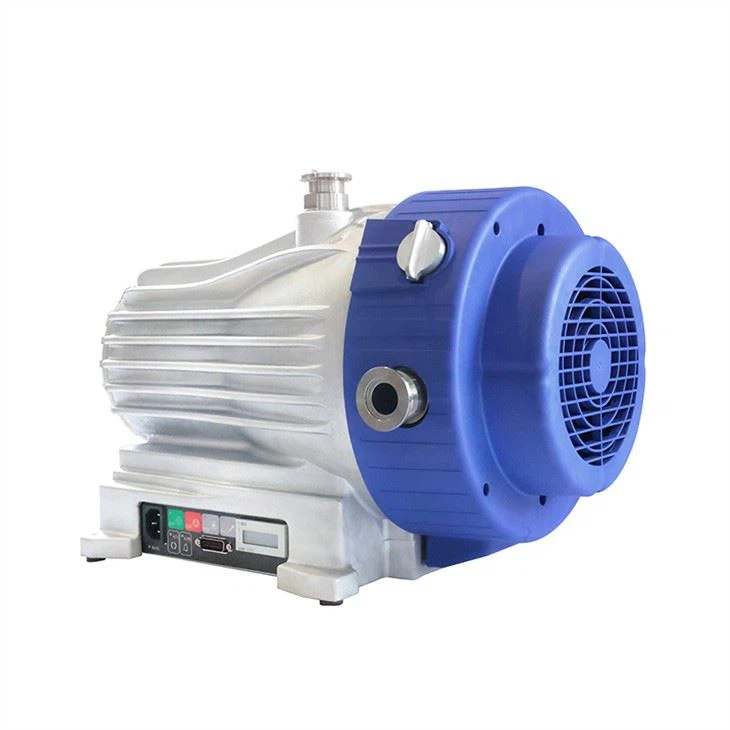
 As a supplier of Scroll Dry Vacuum Pumps, I've had the privilege of witnessing the widespread adoption of these pumps across various industries. Their ability to create a dry and clean vacuum environment has made them a popular choice for applications such as Glove Box Scroll Vacuum Pump, Scroll Vacuum Pump Used in Industries, and Small Protable Scroll Vacuum Pump. However, like any technology, Scroll Dry Vacuum Pumps are not without their drawbacks. In this blog post, I'll explore some of the disadvantages of these pumps to help you make an informed decision when considering them for your application.
Limited Vacuum Level
One of the primary disadvantages of Scroll Dry Vacuum Pumps is their limited vacuum level. While these pumps can achieve a relatively high vacuum compared to some other types of pumps, they may not be suitable for applications that require extremely low pressures. The ultimate vacuum level of a Scroll Dry Vacuum Pump is typically in the range of 10^-2 to 10^-3 mbar, which may not be sufficient for applications such as semiconductor manufacturing, high-energy physics experiments, or certain types of analytical instruments.
In applications where a deeper vacuum is required, other types of pumps, such as turbomolecular pumps or diffusion pumps, may be more appropriate. These pumps can achieve much lower pressures, down to 10^-6 to 10^-9 mbar or even lower. However, they are also more expensive, require more complex maintenance, and may not be suitable for all applications.
Sensitivity to Particulates and Contaminants
Scroll Dry Vacuum Pumps are sensitive to particulates and contaminants in the gas stream. The scrolls in the pump are designed to create a seal by sliding against each other, and any foreign particles or contaminants can cause damage to the scrolls, leading to reduced performance or even pump failure. This makes it essential to use appropriate filtration and purification systems to remove any particulates or contaminants from the gas stream before it enters the pump.
In addition, Scroll Dry Vacuum Pumps are not suitable for pumping gases that contain condensable vapors or liquids. The presence of condensable vapors or liquids can cause the scrolls to stick together, leading to reduced performance or pump failure. If your application involves pumping gases that contain condensable vapors or liquids, you may need to use a different type of pump, such as a liquid ring pump or a diaphragm pump.
Higher Initial Cost
Compared to some other types of vacuum pumps, Scroll Dry Vacuum Pumps can have a higher initial cost. This is due to the complex design and manufacturing process of these pumps, as well as the use of high-quality materials. The higher initial cost can be a significant barrier for some applications, especially those with limited budgets.
However, it's important to consider the long-term cost of ownership when evaluating the cost of a vacuum pump. Scroll Dry Vacuum Pumps are generally more energy-efficient and require less maintenance than some other types of pumps, which can result in lower operating costs over the life of the pump. In addition, the dry operation of these pumps eliminates the need for oil or other lubricants, which can further reduce operating costs and environmental impact.
Limited Flow Rate
Scroll Dry Vacuum Pumps typically have a limited flow rate compared to some other types of pumps. This means that they may not be suitable for applications that require a high volume of gas to be pumped in a short period of time. The flow rate of a Scroll Dry Vacuum Pump is typically in the range of a few liters per minute to several hundred liters per minute, depending on the size and design of the pump.
In applications where a high flow rate is required, other types of pumps, such as rotary vane pumps or screw pumps, may be more appropriate. These pumps can achieve much higher flow rates, up to several thousand liters per minute or more. However, they may also be more expensive, require more complex maintenance, and may not be suitable for all applications.
Noise and Vibration
Scroll Dry Vacuum Pumps can produce significant noise and vibration during operation. The noise level of these pumps is typically in the range of 60 to 80 decibels, which can be a nuisance in some environments. In addition, the vibration produced by the pump can cause damage to other equipment or components in the vicinity.
To reduce the noise and vibration levels of a Scroll Dry Vacuum Pump, it's important to use appropriate mounting and isolation techniques. This may include using vibration isolation pads or mounts, installing the pump in a soundproof enclosure, or using a flexible coupling between the pump and the motor.
Conclusion
While Scroll Dry Vacuum Pumps offer many advantages, such as dry operation, energy efficiency, and low maintenance, they also have some disadvantages that should be considered when evaluating them for your application. These disadvantages include limited vacuum level, sensitivity to particulates and contaminants, higher initial cost, limited flow rate, and noise and vibration.
If you're considering using a Scroll Dry Vacuum Pump for your application, it's important to carefully evaluate your requirements and compare the performance and cost of different types of pumps. Our team of experts is available to help you select the right pump for your application and provide you with the support and service you need to ensure its reliable operation.
If you have any questions or would like to discuss your vacuum pumping needs further, please don't hesitate to contact us. We look forward to working with you to find the best solution for your application.

References
- "Vacuum Technology: A Practical Guide for Scientists and Engineers" by Peter L. Hagans
- "Handbook of Vacuum Physics" edited by A. Roth and G. S. Setterington
- "Vacuum Pumps and Systems" by Klaus D. Beyer